What actually goes into moving an oversized load
A shipper sees a piece of equipment and a truck and assumes the hard part is the drive. The drive is usually the easiest part. Everything that makes an oversized load move safely and on schedule happens before the wheels turn, and most of it is invisible to the client until something goes wrong.
It starts with a route survey, not a truck
Before we quote a schedule, someone drives the route the load will actually take. That survey is where the plan gets built: bridge clearances and weight ratings, overhead utility lines, roundabouts and tight turns the trailer won't clear, construction zones, and any seasonal restriction that changes the picture in a month. A road that looks fine on a map can have a single underpass that rules it out entirely.
The survey also sets the real timeline. If a utility company has to temporarily lift a line, or a municipality needs notice to close a lane, that lead time gets built into the schedule now, not discovered the week the cargo is ready to move.
Permits are jurisdiction by jurisdiction, not one form
Every province, state and municipality the load passes through has its own permitting process, its own thresholds for what counts as oversized or overweight, and its own paperwork. A move from an Ontario plant to a site in the U.S. Midwest isn't one permit — it's a stack of them, each tied to a specific stretch of road and often a specific travel window.
- Dimensional and weight permits for each province, state or county the route crosses
- Bridge and structure approvals where load weight exceeds standard ratings
- Travel-time restrictions — many jurisdictions limit oversized moves to daylight, off-peak, or specific days
- Utility coordination where lines, signals or signage need to be temporarily adjusted
Where plans go wrong
Most permit delays we see aren't caused by a missing form — they're caused by a route that was booked before the permits were confirmed. Lock the corridor first, then the schedule holds.
The lift plan is where the real risk gets managed
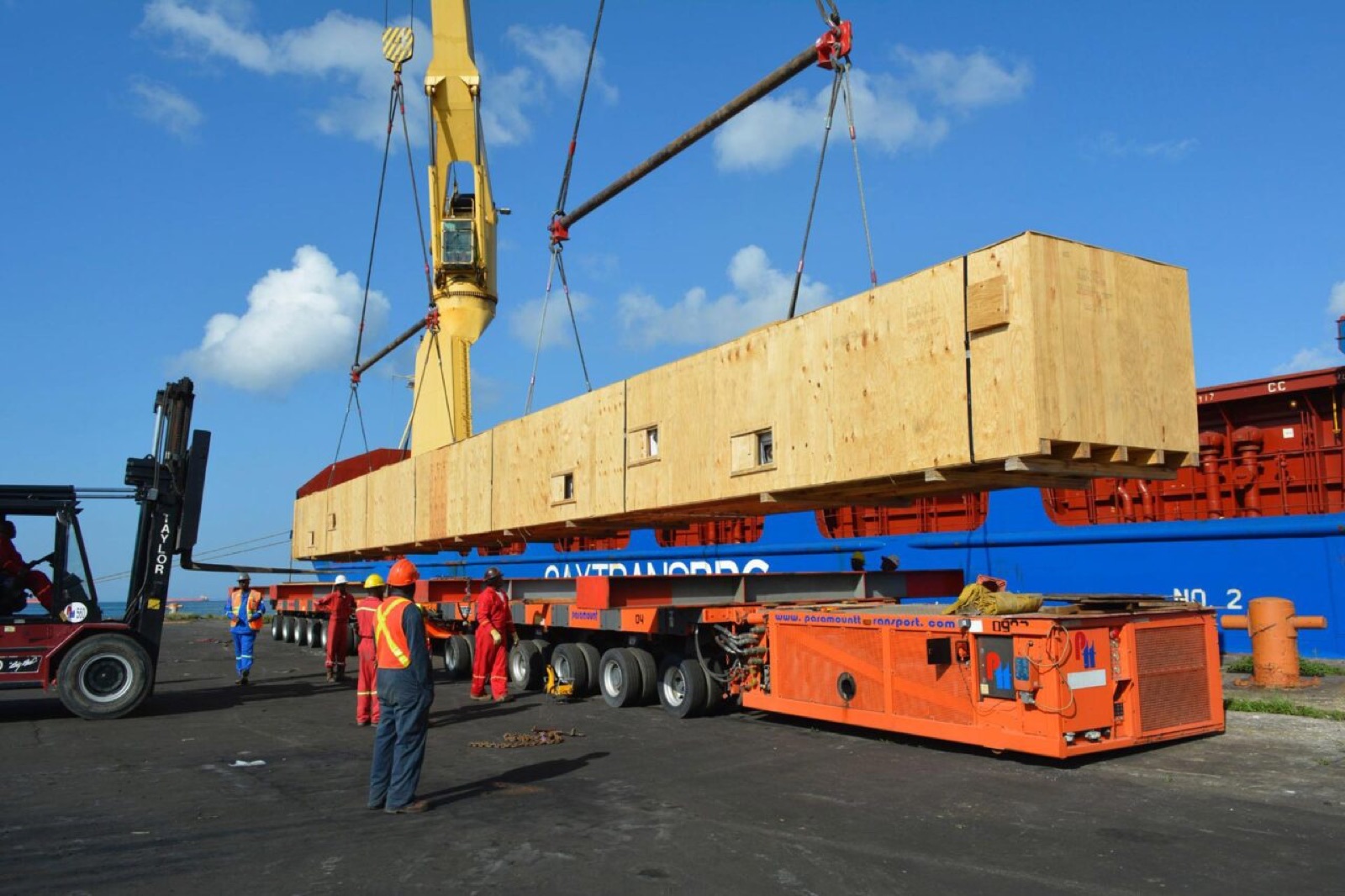
Getting the cargo onto the trailer is its own engineering problem. Weight distribution, center of gravity, rigging points and crane capacity all get worked out on paper before anything is lifted. For genuinely heavy or awkward pieces, that means a written lift plan reviewed and signed off by someone qualified to catch a mistake before it becomes an incident.
“The plan on paper is what keeps the load-out boring. Boring is the goal.”
Escorts, pilot cars and timing
Depending on dimensions, an oversized load travels with pilot cars ahead and behind, sometimes with a height pole to check clearances in real time, and occasionally with a police escort where the jurisdiction requires it. None of that is decided on the fly — it's specified in the permit and confirmed before departure, along with exactly when the load is allowed on the road.
Timing matters more than shippers expect. A load cleared to move at 2 a.m. on a Tuesday can't leave at 2 p.m. on a Wednesday just because the truck is ready. The permit says when, and the plan is built around that window.
What can still go wrong, and how it's headed off
Weather, an unplanned road closure or a permit amendment can still shift a schedule. The difference between a manageable delay and a lost week is whether there's a contingency route and a single point of contact already tracking the load, empowered to make the call and keep the client informed — not chasing three different carriers for an answer.
That's the part that doesn't show up in a quote line item. It's also the part that decides whether an oversized move lands on the day it was supposed to.
The short version
- The route is surveyed and locked before a truck is booked — bridges, overhead lines and turn radii decide the plan, not the map.
- Permits are secured jurisdiction by jurisdiction. A load crossing three provinces or states needs three separate approvals, each with its own rules.
- The lift and load-out plan is engineered on paper first, with weight distribution and rigging signed off before anything leaves the ground.
- Escort vehicles, timing and contingency routing are set in advance, so the plan survives contact with the road.
Keep reading
Keeping freight moving across three borders
Where shipments lose days between Canada, the USA and Mexico, and how the right paperwork keeps them out of the yard.
5 min readRead the article
Classification mistakes that cost you at the line
The small documentation errors that trigger holds and penalties, and how to clear clean the first time.
4 min readRead the articleHave a shipment that won't fit the standard playbook?
Tell us what you're moving. We'll come back with a plan, a timeline, and a single point of contact who owns it end to end.